
ALLI WICHERT
PHOTOGRAPHER
JAMIE DIEDRICH
STAFF WRITER
9/30/2024
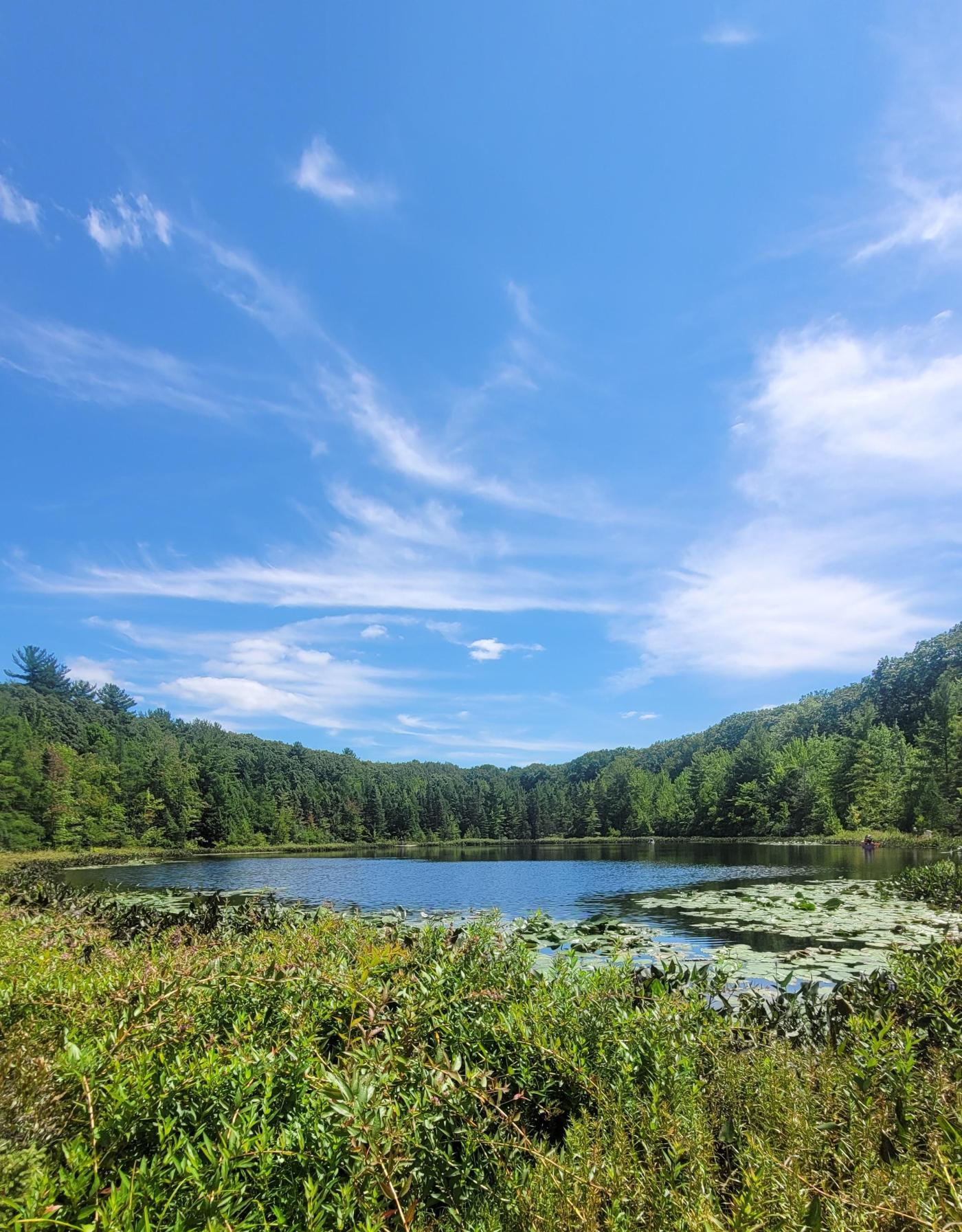
A new project is afoot at the ecological site at the Vestaburg as Dr. John Rowe, professor of biology, and a team of individuals in the field begin a reforestation project. The project will open opportunities for individuals in science-related studies to closely observe and aid in rebuilding forest structures and the invasive species that inhabit that space.
“What we’re going to be doing is removing a lot of the trees that are kind of unnaturally high concentrations because it was clear cut back in the 1800s and then, back in the mid to late 1800s, they just sort of let it grow back in. So it was populated by a tree called the bigtooth aspen that is one of the first trees to arrive on the scene,” said Rowe.
Rowe continued by saying, “Normally you don’t have huge clear-cut areas. You might have a little opening in a forest and they would come in and grow in there. This is all big tooth aspen. So if you look across, at least part of the northern side of the property is just almost all big tooth aspen. And so, what we’re gonna do is we’re going to cut out many of those trees.”
One of Rowe’s main priorities is the monitoring and data collection of the rate at which invasive species are going to, potentially, swiftly overtake the newly cleared area. The two trouble plants, autumn olive and buckthorn, are both classified as shrubs, with autumn olive being considered restrictive as an invasive species.
The observation extends to wildlife as well, tapping into Rowe’s usual work with ecology. “We’ll be monitoring birds, as they come back. So we’ll have, we’ve lost a lot of birds out there because the forest is senesced and transformed itself into something that’s inhospitable for a lot of birds, and we’re gonna see if we can bring some of the bird species back that have been gone for a long time,” said Rowe.
Brian Doyle, professor of biology & biochemistry, also works alongside students at the bog. His work studies the medicinal properties of native plants which have been used by Native Americans for generations. This plant, called the American Mayapple, holds a unique toxin called podophyllotoxin which derivatives are used in cancer therapeutics. Dr. Doyle and his research student, Scott Sparks (’25), use the bog to collect samples to process and analyze in the labs of Alma College.
“This winter and starting next year, we’re going to have some structured projects that students can help get involved in. So going out and setting up some of our plots, monitoring them, and so forth. There would be some things on our biology website where if you want help and to get involved, it’s like, ‘here’s what we have for you’. So it will be something that people will know about based on announcements made.” said Rowe.
Dr. Rowe’s main priority now is making sure students are aware that this is a good change with a positive result in the long run. “We are going to be removing a good number of trees. So the forest is gonna look quite different, and it’s going to look very open, and it’s gonna be a very different sort of place.
So the dense woodland that we see here, around much of it, is going to be eliminated, and it’s so it’s gonna look a little bit more barren than it does now.” said Dr. Rowe.
Rowe wants to steer away from the concerns that may come with the mass clearing of trees in a certain area, ensuring that in the long run, this will be an improvement on the ecosystem rather than a damaging deforestation project. The goal is to build the forest back better so it can sustain life and bring the Vestaburg back to it’s original glory. The project will be open to students in STEM soon.
 The Almanian: News
Leave a Reply