
LEXIE THAYER
PHOTOGRAPHER
NAYONIKAA SINGHAL
STAFF WRITER
3/30/2026
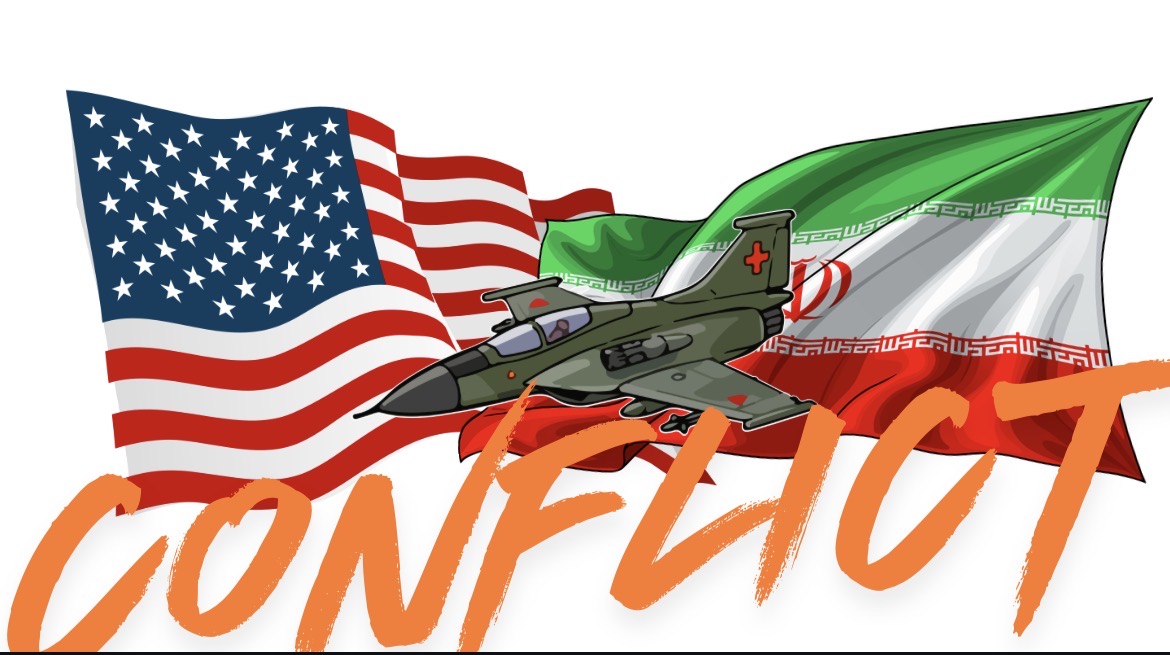
Weeks into the US-Israel war on Iran, the conflict continues to widen, drawing in regional actors and reshaping global markets as diplomatic efforts stall. Washington and Tel Aviv have intensified coordinated strikes on Iranian military infrastructure, while Tehran insists it will not negotiate under pressure.
Iranian state media quoted one senior official calling the United States’ 15-point peace proposal “a blueprint for capitulation disguised as diplomacy,” according to NBC News. This signalled that Tehran sees little incentive to deescalate while under bombardment. The U.S., meanwhile, has expanded its military footprint to more than 50,000 troops across the region, supported by aircraft carriers and long-range strike capabilities.
A Pentagon spokesperson said the campaign aims to “neutralize Iran’s ability to threaten its neighbours,” though analysts warn that the strategy risks deepening the regional spiral, according to Al-Jazera.
The paralysis of the Strait of Hormuz has become one of the most consequential outcomes of the conflict. Nearly 2,000 ships and 20,000 seafarers remain stranded as naval forces manoeuvre in contested waters.
This situation has been described as the most severe disruption to global shipping in over a decade, noting that every additional day adds billions to global economic losses according to CNN.
Oil markets have reacted with volatility, swinging sharply as rumors of diplomatic progress collide with Iran’s rejection of the US proposal. Countries dependent on imported fuel have already declared emergencies, and energy analysts warn that the longer the strait remains blocked, the more severe the global ripple effects will become.
“I’m literally planning my week around how many times I have to drive,” said Wassim Guerfali (‘27).
Across the region, spillover violence continues to intensify. Kuwait reported a drone strike on a fuel tank at its international airport. Saudi Arabia intercepted more than thirty drones and a ballistic missile aimed at oil facilities.
Bahrain reported casualties, including a Moroccan civilian working with UAE forces. In Lebanon, the death toll has surpassed one thousand as Israel orders mass evacuations in Beirut’s southern suburbs and signals readiness for a ground operation.
Hezbollah continues firing rockets and drones into northern Israel, framing its actions as part of a broader regional defence of Iran. Iraq, caught between Washington and Tehran, has authorized Iran aligned militias to retaliate after a suspected US strike killed 15 fighters.
Diplomatic channels remain active but unproductive. Pakistan has offered to host negotiations, while China and France call for de-escalation. Yet both Washington and Tehran
accuse each other of negotiating in bad faith, creating a cycle in which military escalation and diplomatic messaging move in parallel without intersecting. For Alma College students, the conflict’s effects are already visible in daily life. Gas prices in mid Michigan have climbed sharply, straining student budgets.
“I used to fill my tank for sixty bucks. Now it’s almost eighty,” said Alex Detterman (‘29).
For many students, it is hard to grasp the widespread effect of a war so far away.
“People think global politics don’t affect small towns, but they do pretty fast” said Nayeli Santana Venegas (‘27).
In a town like Alma, the war may be thousands of miles away, but its consequences are already close to home


Leave a Reply