
TOBY REEVES
GRAPHIC DESIGNER
LEXIE THAYER
LAYOUT EDITOR
11/17/2025
The Federal Government of the United States shut down on October 1 due to Congress’s failure to agree on funding legislation. The most significant disagreement currently exists over plans under the Affordable Care Act (ACA).
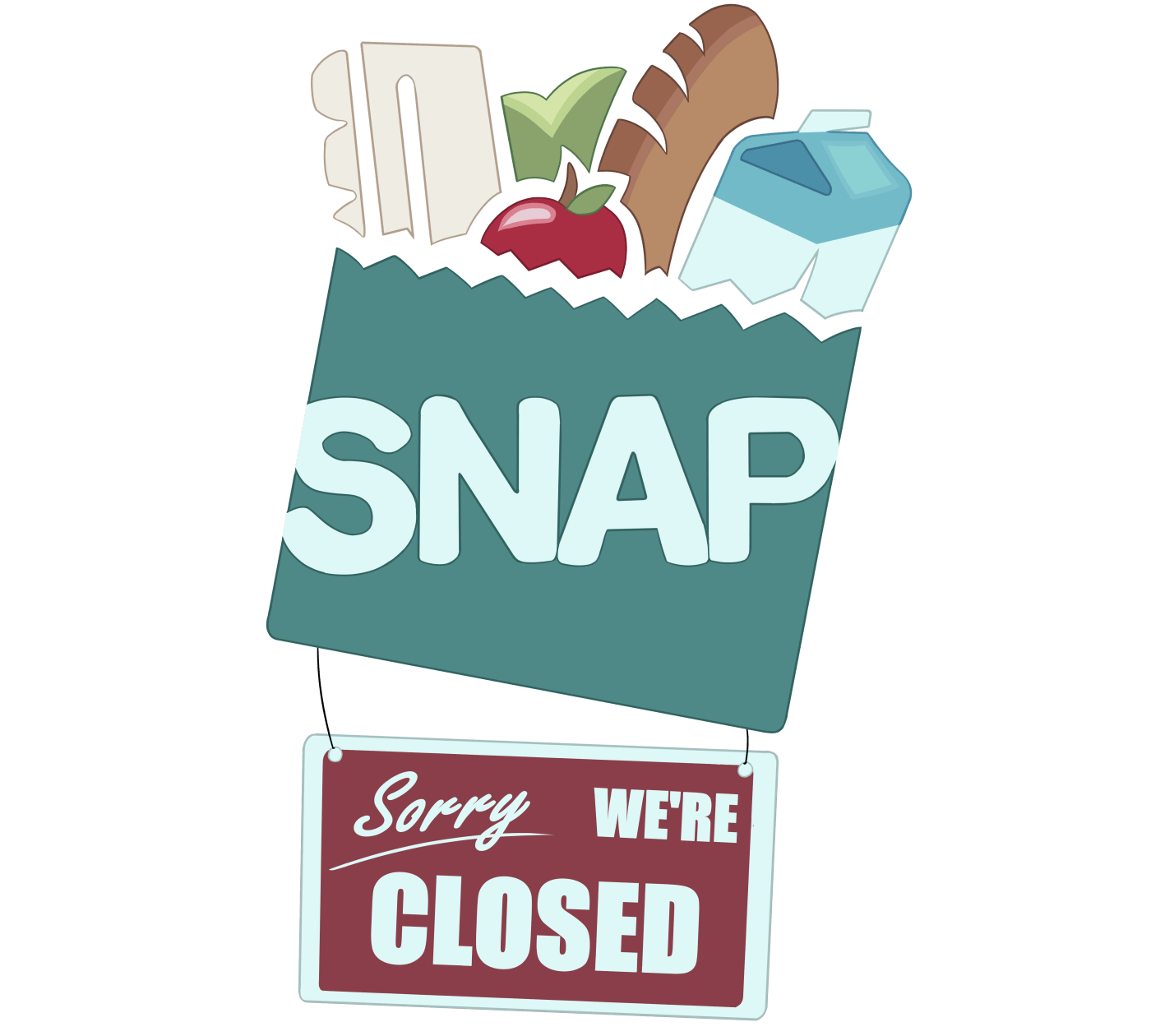
With this shutdown, many benefits were getting cut, including the Supplemental Nutrition Assistance Program (SNAP), which is a federal program that provides monthly benefits to low-income households to purchase food.
SNAP is the nation’s largest nutrition assistance program, accounting for around 70% of USDA nutrition assistance spending in fiscal year 2024, according to the USDA.
This is not the first time that SNAP has been restricted, as this also occurred during the 2018-2019 shutdown. The effects of this shorter shutdown were felt for months, and many researchers have stated the dangers that this shutdown may have for the economy.
“Reducing SNAP benefits absolutely worsens economic inequality. On average, research suggests that SNAP benefits reduce overall poverty rates by 8-10% and reduce child poverty rates by about 20%,” said Professor Matt Hinkel, Assistant Professor of Economics at Alma College.
As of November twelfth, the government was still shut down, with SNAP benefits only being offered to states at a 65% capacity. This has the potential to place many Michiganders – and residents of other states – at a level of unprecedented food insecurity.
“As a student who volunteers at the community cabinet, I’ve seen firsthand the effects of food scarcity, especially in Gratiot County. I think I speak for many people when I say that I hope SNAP can come back, full force, as soon as possible,” said Lily Sierakowski (‘28).
For perspective, around 13% of Michigan households (1.4 million residents) receive SNAP benefits, and about 43% of individuals receiving SNAP benefits are families with children, according to Michigan Human Health Services.
“As a kid, my family always got SNAP, and it always provided us with a sense of security. It’s so sad to think about all the households not getting that anymore,” said Hailee Risner (‘28).
Moreover, SNAP is only one of many programs that were restricted due to the government shutdown. The shutdown also affected other key federal programs, including housing assistance, women, infants, and children (WIC) support, and certain education grants.
“Many others and I at an air force base located in Florida are feeling the effects of the government cut. We aren’t getting paid, and our rent is no longer paid for. It’s getting worse by the day,” said Cologio Alighere, a former Alma High School student.
“Until budgets get confirmed, there’s no way to be completely sure of the Michigan TEACH grant. It’s kind of terrifying,” said Mayte Vazquez-Ceballos (‘28).
Following the government opening November 12th, President Trump signed a bill to fund the government including SNAP, which will be restored this month. However, the bill only lasts until Janurary 30th, 2026, leaving many Americans uncertain about the longevity of SNAP.
If you or somebody you know is currently struggling with the lack of SNAP benefits, Michigan residents can dial 2-1-1 or visit Find Help – Michigan for free referrals to local food programs and support services.
Additionally, the Food Bank Council of Michigan website provides locations for all nearby food banks and additional hunger relief efforts.
 The Almanian: News
Leave a Reply