
GAGANDEEP KAUR
GRAPHIC DESIGNER
NAYONIKAA SINGHAAL
STAFF WRITER
4/7/2025
On January 20, 2025, Donald Trump took office and issued an executive order requiring the State Department to warrant partial or full suspension of entry for citizens of countries with deficient vetting and screening information. Within this executive order, discussions emerged regarding definite travel bans targeting 43 countries.
The order categorizes these countries into three groups. The first is the red category includes nationals that are entirely banned from entering the United States. The second category consists of 10 countries, where only business officials will be allowed entry. Lastly, the yellow category comprises 22 countries, whose governments have been given 60 days to resolve perceived security deficiencies.
“I think as international students all we can do it wait till any travel bans have been implemented” said Nishant Khairnar (‘25), an international student at Alma College. Despite the elaborate timeline that originally planned for implementation by March 21, these travels ban plans have been postponed. However, under the Trump administration, visa restrictions continue to be a focal point.
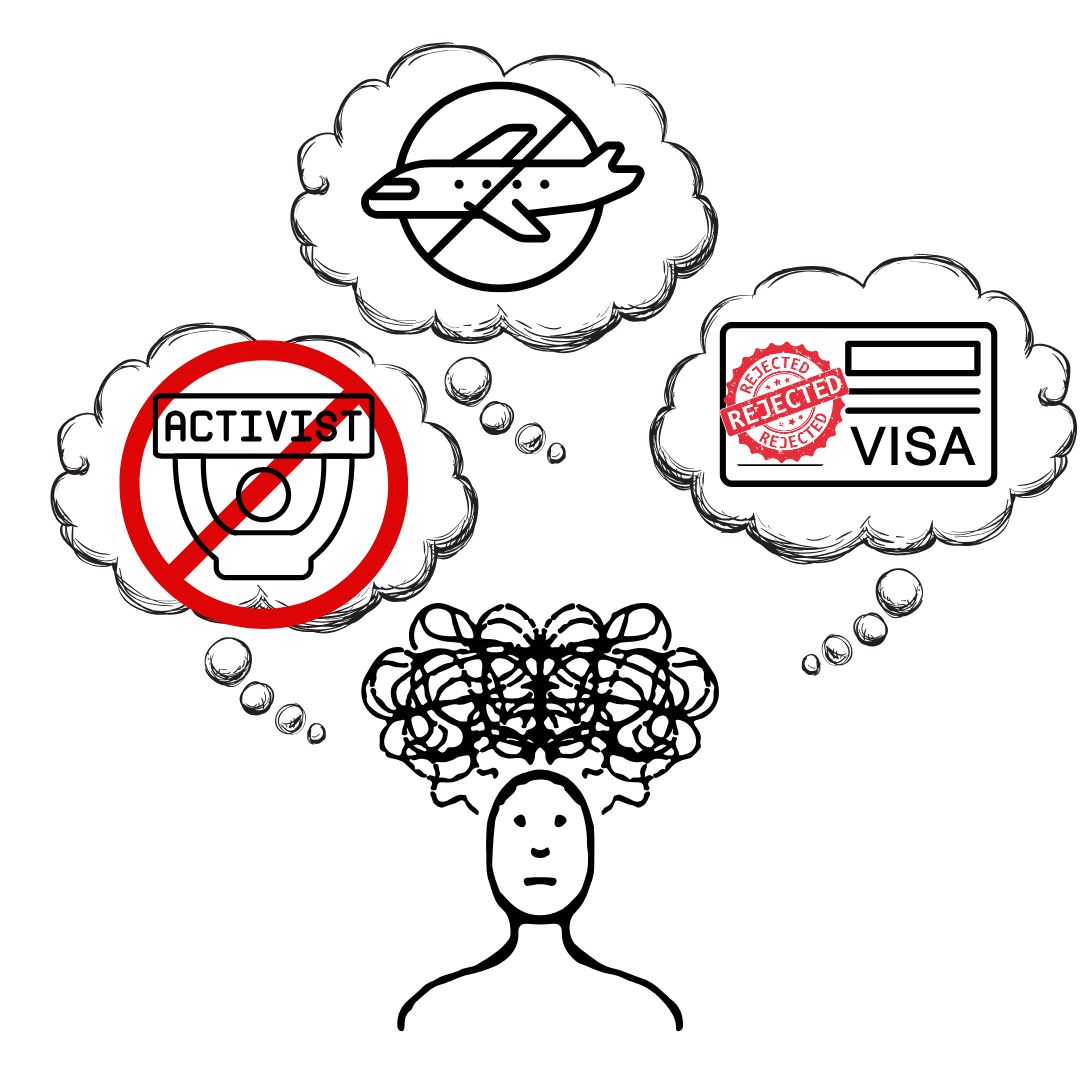
As media coverage continues to highlight visa restrictions, one of the most affected populations is international students. Reports indicate that over 300 student visas were rejected in a single day, causing alarm across academic institutions. The U.S. government has increasingly scrutinized students who have participated in public demonstrations, particularly pro-Palestinian protests.
“We gave you a visa to come and study and get a degree, not to become a social activist that tears up our university campuses. And if we’ve given you a visa, and then you decide to do that, we’re going to take it away,” said Marco Rubio, Secretary of State, in a joint news conference with Guyanese President Irfaan Ali.
Large universities, including Ivy League institutions, have urged international students to reconsider international travel due to fears of visa revocation upon attempting to return. A new initiative called “Catch and Revoke” has been implemented, where artificial intelligence monitors individuals for signs of activism, particularly in relation to extremist groups. If flagged, students receive an email informing them that their visa has been revoked, effectively terminating their ability to remain in the country.
While larger institutions may have the legal and financial resources to support affected students, smaller colleges such as Alma College also face uncertainty. International students make up a crucial part of Alma’s academic and cultural landscape, bringing diverse perspectives to classrooms and campus life. With the increasing restrictions, many international students at Alma worry about their future in the U.S. and whether they will be able to complete their education without fear of deportation or being denied re-entry.
“I was planning to go home this summer, but now I’m afraid I won’t be allowed back, anxiety of not knowing whether my visa could be revoked at any time makes it difficult to focus on my studies.” shared an international student at Alma College.
Alma College administrators have yet to issue a formal statement regarding the new visa policies, but faculty members and student organizations are beginning to discuss ways to support affected students. Some professors have emphasized the importance of academic freedom, and the role international students play in fostering a global learning environment.
As the situation unfolds, the uncertainty surrounding Trump’s travel ban leaves many international students at Alma College and across the nation in a precarious position. With visa policies tightening and government surveillance increasing, the future of international education in the United States remains unclear.
 The Almanian: News
Leave a Reply