
ALLI WICHERT
GRAPHIC DESIGNER
NAYONIKKA SINGHAAL
STAFF WRITER
10/14/2024
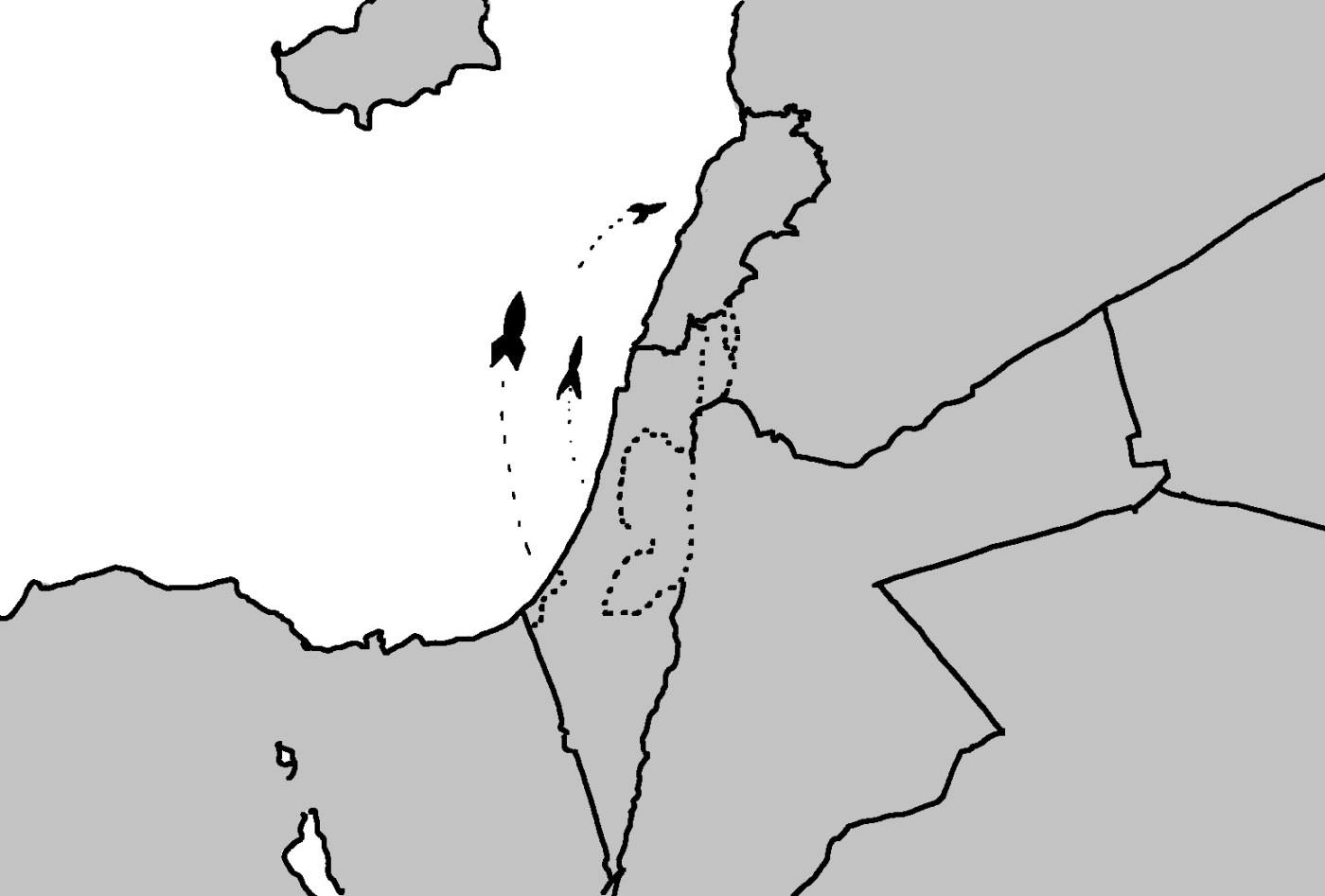
As airstrikes rattle the skies over Lebanon, the ongoing violence underscores the escalating tensions in the Middle East. Recent Israeli bombings have resulted in the deaths of over 1,400 Lebanese civilians and the displacement of more than one-fifth of the country’s population.
The Israeli military’s campaign has extended to southern suburbs of Lebanon and Palestinian refugee camps, prompting over 375,000 individuals to flee on foot across the border into Syria. More than 800 shelters out of 990 are already full, according to the New York Times.
In the wake of these airstrikes, Israeli officials indicated that their operations against Hezbollah would initially focus on ground offensives. This development represents what Israel describes as the “next phase” in its campaign against Hezbollah.
The offensive has led to significant casualties within Hezbollah, including the assassination of its leader, Hassan Nasrallah, along with several senior officers. Despite these losses, Hezbollah remains committed to its support for the Palestinian cause and has appointed a new leader.
The airstrikes were preceded by brief warnings issued by Israeli forces, who hijacked local radio frequencies to advise civilians to evacuate. However, many residents criticized the warnings as vague and insufficient, allowing little time for effective relocation. These evacuation warnings were given after Netanyahu and Biden spoke for the first time in weeks.
President Biden and Israeli Prime Minister Netanyahu last communicated in Aug., and the subsequent silence between the two leaders has highlighted a growing rift, especially as Israel intensified its military actions in Gaza despite Biden’s calls for de-escalation.
Iran has also become involved, providing substantial funding and support to Hezbollah, which operates with backing from Syria and Jordan. Although Tehran attempted a missile strike against Israel, it reportedly resulted in no casualties, leading U.S. officials to label the attack as ineffective.
In response to the ongoing violence, the United States and France have proposed a 21-day ceasefire plan aimed at halting the conflict between Israel and Lebanon. However, efforts to negotiate peace have thus far been unsuccessful.
“Generally, the United States’ response to events in the Middle East has been perceived as poor and disappointing,” said Jake Lasceski (‘26), co-chair of Young Democratic Socialists of America.
While Washington has publicly supported Israel’s right to defend itself against extremist groups, it has also expressed concern over the loss of civilian lives. The U.S. government faces criticism from various quarters for its approach to the conflict.
“What I see happening is a lot of words about ceasefire about returning hostages but I see actions that show the US is willing to support…Israel’s military with a blank check” said Matthew J. Smith, Professor of Religious Studies at Alma College.
“One of the things that activism does is that it makes the public aware of these issues but can also be dangerous and scary, especially in a place like Alma College where there can be a lot of backlashes pretty quickly,” said Smith.
The humanitarian crisis unfolding in Lebanon, marked by widespread displacement and loss of life, adds urgency to the calls for a peaceful resolution. The international community continues to monitor the situation closely but, even in Alma College, some groups and communities engage that closely follow the happenings in the Middle East.
“As a student from an Arabic country and seeing a lot of other Arab students here at Alma College talking about it, it hurt us so much to see our brothers going through this inhuman act,” said Khalil Chalouati (‘26), a Tunisian student from Alma College.
As the situation remains fluid, the prospect of a lasting resolution appears uncertain. The continued military operations and regional dynamics will play crucial roles in shaping the future of Lebanon and its people, as well as the broader Middle Eastern landscape.
 The Almanian: News
Leave a Reply