
WESTON HIRVELA
GRAPHIC DESIGNER
NAYONIKAA SINGHAAL
STAFF WRITER
2/12/2024
Oct. 7, 2023, marked the beginning of one of the most brutal conflicts in the world. The Hamas-led attack on Israel resulted in the killing of 1200 civilians and 250 abdications. The conflict boiled from the years of frustration and anger dealt by Hamas.
This tension was indicated by the surreal evidence of Netanyahu, the Israeli Prime Minister, ripping the Hamas charter which discussed Hamas’ new political program attempting to soften its stance against Israel in May of 2017.
This attack by Hamas and the disdain by Israel led to the death of over 26,000 Palestinian civilians, and the number is escalating every day at an unprecedented rate. The conflict remains ongoing and has roped in the international community on its web. One of the biggest opponents that the conflict gained was South Africa.
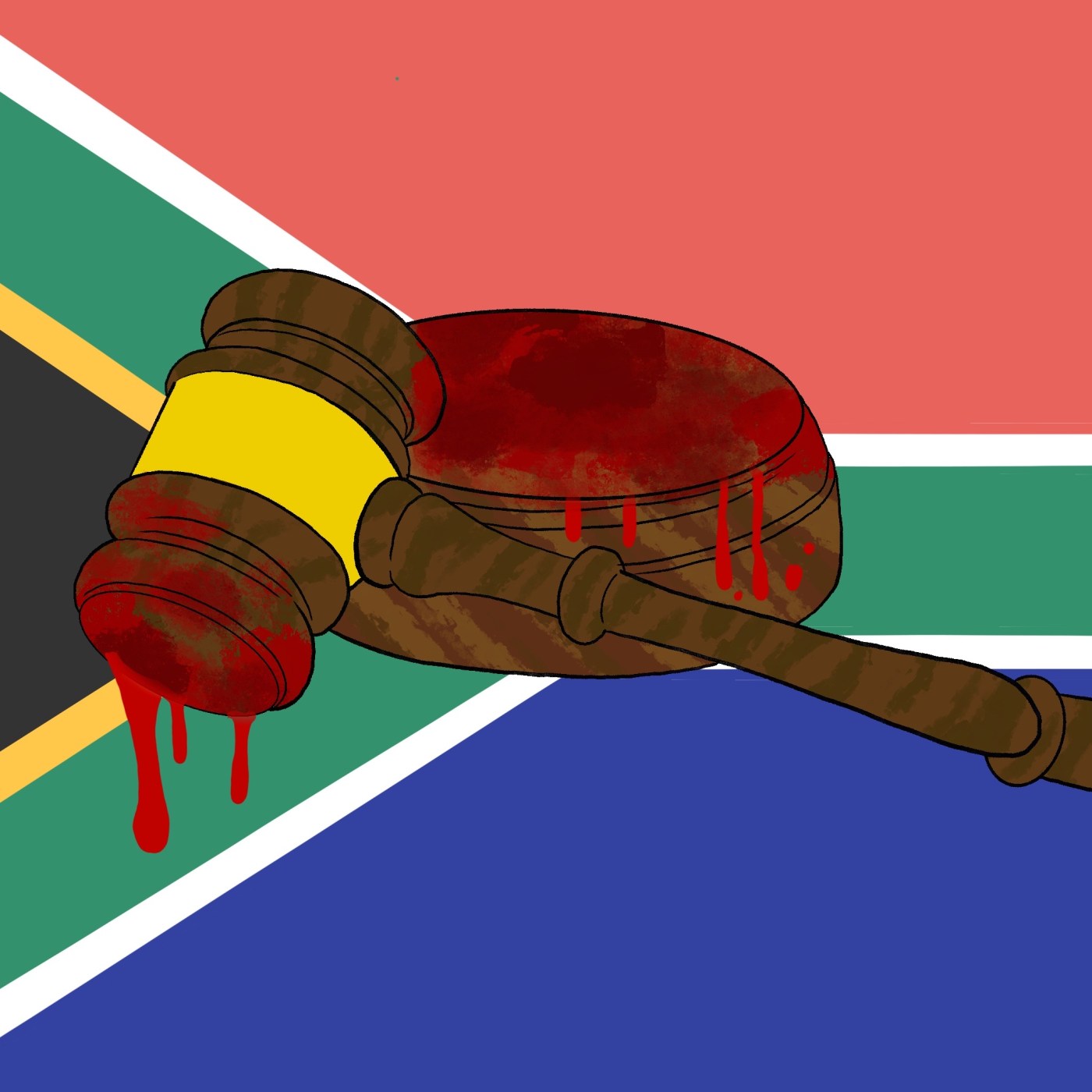
South Africa accused Israel of violating the 1948 UN Genocide Convention, which was drafted partly due to the mass killings of Jewish people in the Holocaust during WWII, marking it as one of the most historic days seen by the world community. The proceedings of the case at the International Court of Justice (ICJ) began in December of 2023.
Israel’s stance on the issue remained by stating the fact that the initial attack was led by Hamas and any actions taken by the country post-Oct. 7 is simply self-defense. South Africa on the other hand took the stance that acts and omissions by Israel are intended to cause the destruction of a substantial part of the Palestinian national, racial and ethnic group.
“It depends on how one looks at it: is Israel attacking Hamas or is Israel attacking Palestinians? If one thinks Israel is attacking Palestinians, then yes, it’s a genocide, but if not then it’s not a genocide. Unless one considers Hamas as a political group and not a terrorist organization… then Israel is committing genocidal acts,” said Emily Patzkowsky (‘25), a student majoring in Political Science.
“So, whether Israel is committing genocide or not depends on how one describes genocide,” said Patzkowsky.
The rulings of the ICJ, in a way, were a compromise of South Africa’s accusations and claims made by Israel. ICJ ordered Israel “to take all measures” necessary to prevent genocidal behavior against Palestinian civilians yet rejected Israel’s request for the case to be thrown out. On the other hand, ICJ failed to rule on the most important request made by South Africa, to suspend military operations and thereby order a ceasefire.
Though the rulings by the ICJ were seen in favor of Israel, it could be noted that the Jewish State faced reputational damage from being associated with genocidal acts, which could further strain public relations.
Despite the ruling by ICJ, the bigger question lies in whether or not Israel will abide by these rulings. “I do not think that Israel will abide by ICJ’s ruling unless there is some sort of economic severity against it,” said Patzkowsky.
Decisions by the court are binding and in case of non-compliance, South Africa may recourse to the Security Council. The option of approaching the Security Council and getting fruitful results, though, appears to be a stretch due to the USA’s procession of veto power and its provision of economic support to Israel.
 The Almanian: News
Leave a Reply