
WESTON HIRVELA
GRAPHIC DESIGNER
BRONWYN MCALINDON
STAFF WRITER
11/20/2023
As tensions rise over many global issues, companies are beginning to speak out for what they support. This has led to a controversy over whether consumers should support certain companies like Starbucks and McDonalds.
Many people are beginning to boycott in order to speak out against what they disagree with. These views can pertain to anything, such as environmental and political issues. Boycotting can be effective in helping send a message to companies. Therefore, companies are being boycotted including Starbucks and McDonalds.
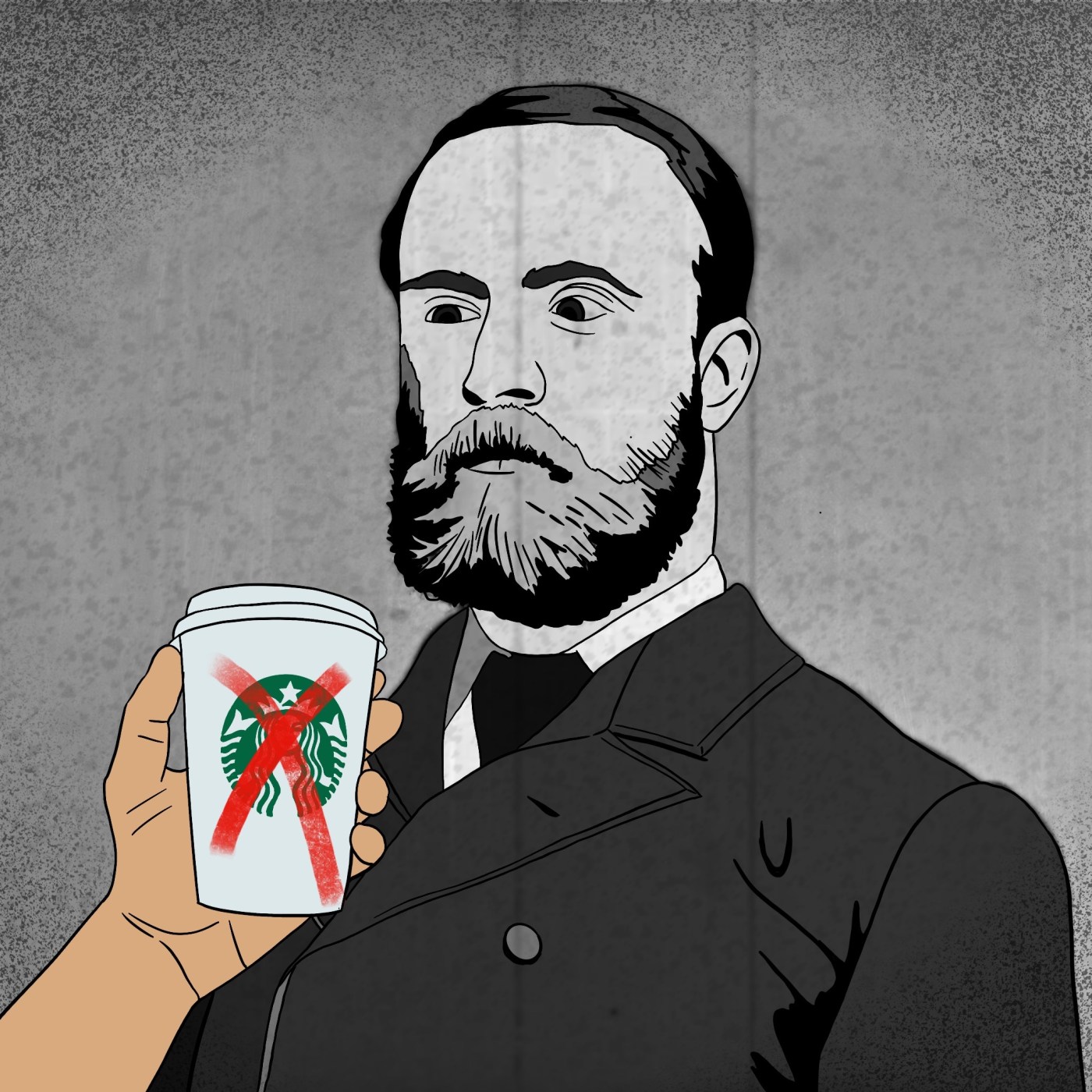
Starbucks is currently being boycotted for a deleted post regarding the conflict in the Israel/Palestine region. In the post on Starbucks’ Workers United social media, they sided with Palestine.
Seeing as the main Starbucks corporation is not affiliated with Starbucks’ Workers United, Starbucks has made a statement expressing sympathy for all victims of the current conflict.
“We unequivocally condemn these acts of terrorism, hate and violence, and disagree with the statements and views expressed by Workers United and its members,” said Starbucks in a post made to one.starbucks.com.
McDonald’s is also being boycotted for expressing their support for Israel by donating free meals to the Israel Defense Forces (IDF).
This was done by a franchise in the Israel and Palestine region after stating on the McDonalds’ Israel Instagram that the franchise was donating meals to those involved in the defense and health of Israel. They recently posted about having donated 12,000 free meals to the IDF.
These boycotts show what can happen when companies speak or act on a weighty issue such as this. Consequently, the public posts and actions taken by Starbucks and McDonalds have resulted in people deciding to boycott. In these times, taking sides is challenging, and finding a way to boycott effectively is difficult.
“The abolitionists in the [nineteenth] century who really walked the walk refused to wear cotton because it was produced by enslaved labor… They actually lived out their ideals in a time [where] that was not an easy choice,” said, Kristin Olbertson, Professor of History at Alma College.
While boycotts may look different now, the rise of social media has allowed boycotts to evolve from not only affecting companies in an economic sense to also affecting companies’ publicity counts.
“Boycotts are rarely the precipitating factor for change. Rather, they bring attention to an issue and signal the magnitude and intensity with which a group feels a particular way,” said Maurice Schweitzer, Professor of Operations and Information Management at the University of Pennsylvania in an interview with the Los Angeles Times.
How a group may feel about a topic can significantly affect how a business can act regarding that topic. Even if there is not as much of an effect on the business economically, it can definitely affect the company in general.
“I don’t think it has to be necessarily all or nothing… I think if there’s a cause that you’re really committed to and you want to make your claim and not participate in consuming a particular product or not support a particular corporation by withdrawing your funds from them, then I think that’s… a time-honored American tradition,” said Olbertson.
Boycotting is a way to support personal views. It can be a way to stand in solidarity with certain beliefs. When enough people get involved, boycotting can create momentum by showing a public call for change.
 The Almanian: News
Leave a Reply